The Christian world celebrates the birth of the Lord Jesus. We all know that He was not born at this time of year, but we do not know the date either. I believe, personally, that God, in His sovereignty, chose to conceal that information from us for some reason, which He reserved under His sole authority and knowledge. Possibly He did it so that believers would celebrate His birth on the day He was born as the new man in every child of God, so that the only thing remembered and emphasized would be His spiritual birth in each believer and not the chronological one. I have always seen it as good, and even beneficial for the testimony of preaching, that the Christian world celebrates and remembers the birth of the Lord (the nativity), especially if they do so with the right spirit, without paganism or commercialism.
It makes me think, and it still intrigues me, that the Lord revealed the date of His Son’s death during the Jewish Passover, but concealed the day of His birth, and also that of His coming. Might there not be a purpose in this? Knowing the Lord, who is perfect in His will and in all His ways, I think that He did have an intention. What is the reason for His intriguing silence? I confess that I do not know. The secret things belong to God, and the things revealed belong to us and to our children (Deut. 29:29). The three events in the life of the Son of God are relevant and momentous in the revelation of the Father’s eternal purpose: His birth, His death and His second coming. Why did He keep His birth and His second coming secret, and reveal only the date of His death? We know that the gospels give historical details about the time of His birth. They mention the edict of the emperor Caesar Augustus (Luke 2:1, 2); and also that it was in the time of King Herod the Great (Matt. 2:1). Centuries later, human history was divided taking His birth as the point of reference (Before Christ, and After Christ). Today we know that the person responsible for making the calendar change, Dionysius Exiguus (460/465 – 525/550 AD), was mistaken by 4 to 7 years in his calculations when dating the reign of Herod the Great. Although God used this man to establish that the birth of the Lord constitutes the before and after of man’s history, He allowed, in His sovereignty, that he err in his calculations.
This conduct of the Sovereign King adds more mystery to the date of the Redeemer’s birth. He decided to reveal the time, but not the month or the day of the nativity. The Father will have His reasons, which I do not know, but I learn that the Kingdom of God is spiritual, so the birth of the Savior is a kairos and not a chronos. And the lesson is this: without diminishing the importance of the historical fact, and without denying the truth of this solemn and glorious event, I believe that the Lord wants Christmas to be remembered for its spiritual implications and not so much as a chronological date. This ensures that the birth of Jesus —the greatest gift of God to the children of men— is remembered and celebrated every day of each believer’s life, and not just once a year. Every morning our prayer should be: Thanks be to God for His indescribable gift. Thanks be to God for Jesus Christ.
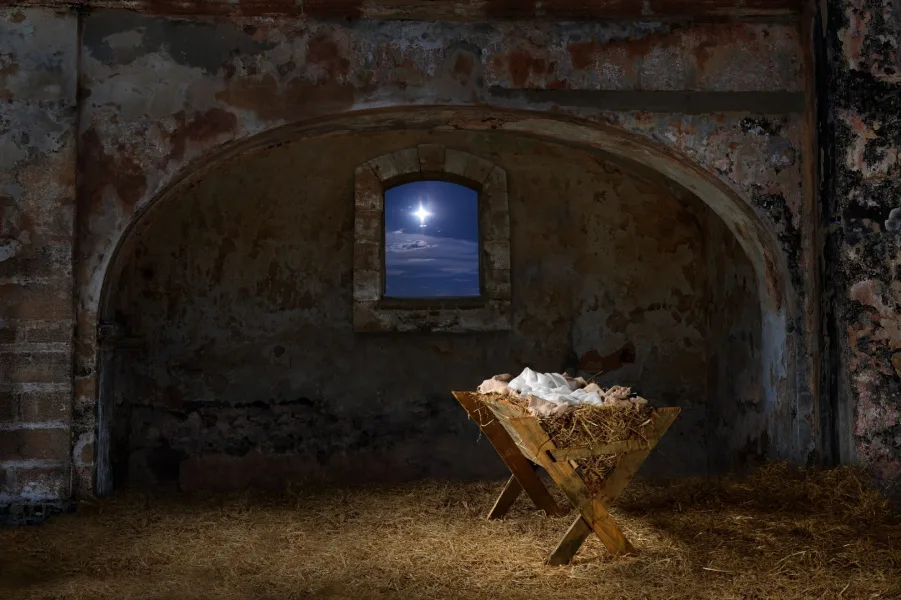
Jesus was born physically in Bethlehem of Judea, on an unknown day, but He is born spiritually in all of God’s chosen ones when they are born again by the powerful work of the Holy Spirit. Because of man’s religious tendency to stray, and to remember and celebrate dates, and not the marvelous works of the Lord and His holy purpose in them, which lead us to worship with expressive acts of thanksgiving, Christmas is Christ born in the manger of our hearts. There we always keep for Him our gifts: myrrh, gold and frankincense. Merry Christmas!
A reflection that the Lord gave to Pastor Juan Radhamés Fernández for his fellow servants of the Tribe of the Life of the Kingdom, on this day, December 24, 2017.